Why Fewer Elements Often Create More
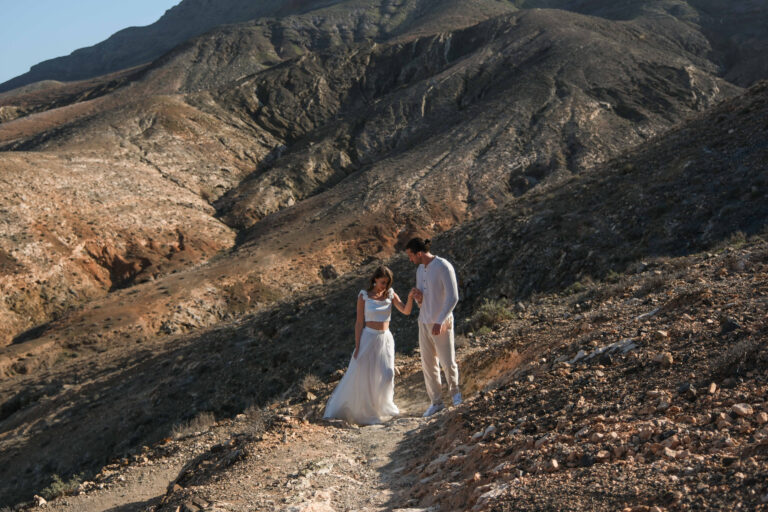
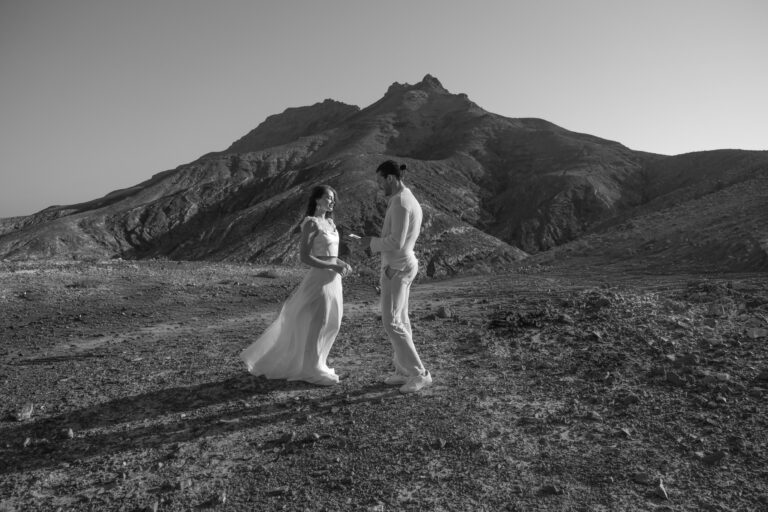
An elopement is all about being present. It’s not about cramming as many moments as possible into one day, but about creating space for what truly matters. That’s exactly why a simple elopement planning approach often works better than a packed schedule. Fewer stops, fewer obligations, and fewer transitions mean you’re not constantly being moved from one item to the next, but can truly settle into the experience.
Many couples initially think that a wedding day becomes more valuable when there is more to fit into it: an elaborate getting ready, multiple locations, a picnic, a ceremony, dinner, a sunset shoot, and perhaps another activity. In practice, calm comes from daring to leave things out. A thoughtful elopement day schedule provides not only clarity, but also emotional breathing room. You can feel that in the way you move, talk, and look at each other.
A peaceful wedding day doesn’t feel empty, but rich in attention
Anyone who wants to plan an intimate wedding benefits from choices that slow the day down. For example:
- one main location with a second spot nearby
- enough buffer time between the ceremony and photos
- one meaningful meal instead of several scheduled elements
- time for silence, walking, or simply sitting together
This is especially valuable with destination wedding planning in Europe. New surroundings, travel time, and weather conditions already demand enough of your attention. The fewer separate elements there are, the greater the chance that the day will feel natural — and that afterwards, you won’t remember it as a schedule, but as a story you truly lived.
Making Time for Vows Without Rushing
For many couples, their vows are the most personal moment of the day. Yet in a traditional schedule, they are often fitted somewhere between other elements, as if they were simply another block on the timeline. With an elopement, that’s a shame. When your vows are given a central place, there is room for emotion, silence, and genuine connection. That is exactly where intentional elopement planning makes a difference.
Rush is the greatest enemy of sincere words. When you are still travelling just before your vows, waiting for others, or already thinking about the next part of the day, you feel it immediately. That’s why it’s smart to reserve time not only for saying the vows themselves, but also for what comes before and after. A peaceful walk to the location, a moment alone, taking a deep breath, and not having to move on immediately afterwards. This gives the moment the space it deserves.
A good elopement day schedule takes your natural pace into account. Perhaps you want to exchange vows at sunrise, when everything is still quiet. Or perhaps later in the day, in a place where the light becomes softer and the initial nerves have settled.
Your vows don’t need to be quick; they just need to be real
For anyone envisioning a peaceful wedding day, this is often one of the most important choices. By not treating your vows as a short ceremony text, but as the heart of planning an intimate wedding, you create a day that doesn’t just look beautiful, but is deeply felt.
Limiting Travel Time for More Peace Together
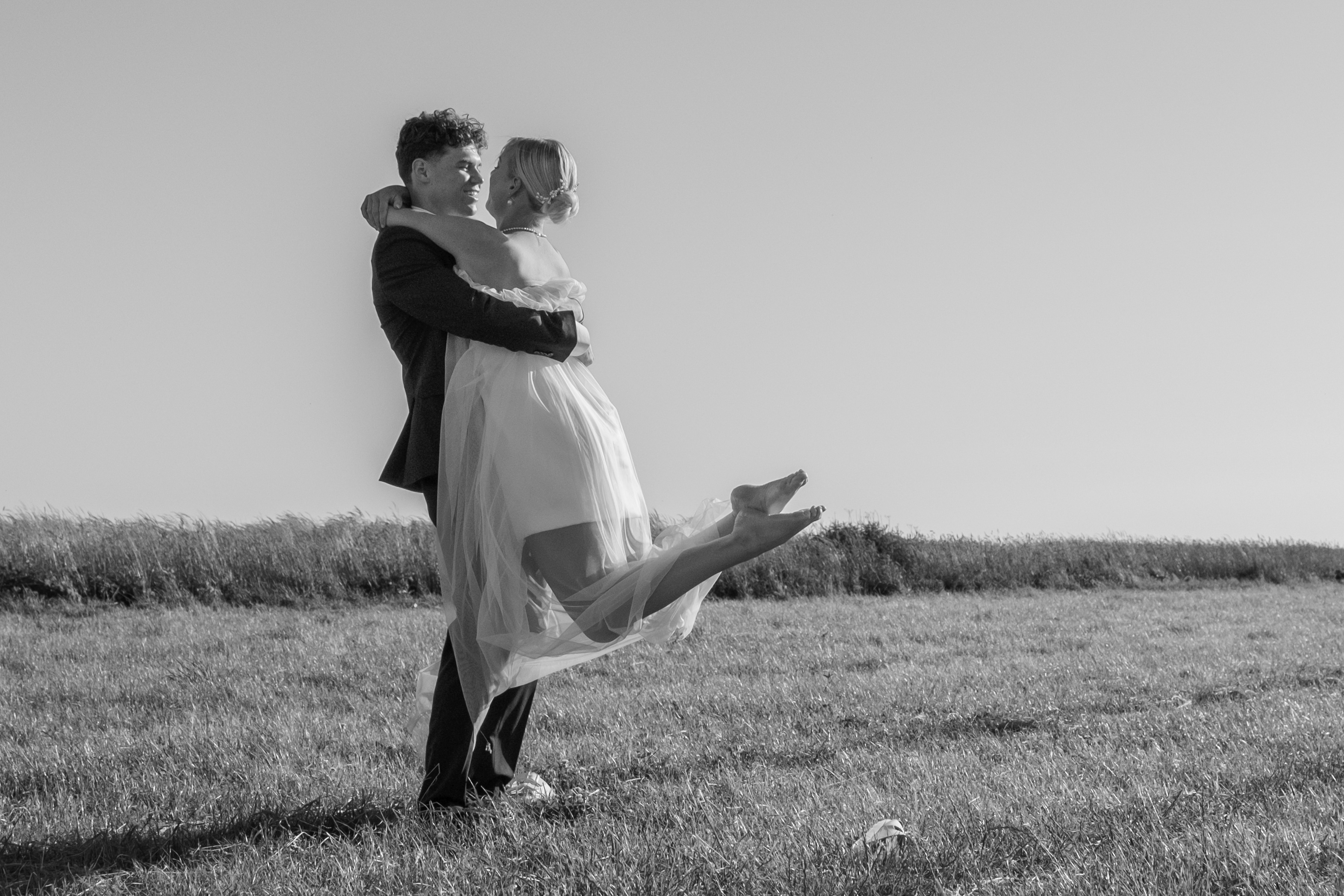
One of the most underestimated factors in a relaxed wedding day is travel time. On paper, it often seems manageable: a viewpoint for the first look, another location for the ceremony, somewhere else for lunch, and then a beach or mountaintop for photos. But in reality, every move costs energy. Not just because of the distance, but also because of loading and unloading, navigating, waiting, and constantly arriving somewhere new.
Choosing less distance is really choosing more time together. That makes a huge difference to the experience of an elopement. Instead of constantly being “on the way,” you can truly take in your surroundings. Smart elopement planning therefore isn’t about finding as many beautiful places as possible, but about creating a logical flow between locations that complement each other.
With destination wedding planning, this is especially important. On an island, in the mountains, or on unfamiliar rural roads, everything often takes just a little longer than expected. Wind, parking, temperature, and terrain all play a role. That’s why it usually works better to choose one region — or even one location with different corners and atmospheres.
- choose locations within 10 to 20 minutes of each other
- always allow buffer time for unexpected delays
- use travel time intentionally as a moment to slow down, not as a race against the clock
A peaceful wedding day isn’t created only by what you add, but also by what you leave out. Less travel means more time for small gestures, spontaneous conversations, and those precious moments when you don’t have to do anything at all. That is exactly where the power of a well-structured elopement day schedule lies.
How to Let Photo Moments Happen Naturally
The most beautiful photos on an elopement day rarely feel posed. They happen when you’re not focused on performing, but on experiencing the moment. That’s why natural photography doesn’t begin with the camera, but with the planning. When there is enough time, calm, and trust, photos don’t need to become a separate element that creates tension. They naturally grow out of what is already happening.
For couples who want to plan an intimate wedding, this is often a relief. You don’t need to constantly know what to do with your hands or how to stand. A peaceful walk, helping each other with your clothes, having a drink together, feeling the wind, talking for a while after your vows — these are all moments that look authentic because they are authentic. Good elopement planning therefore creates the conditions in which genuine moments can happen.
Relaxed images usually come from relaxed time
during beautiful light is valuable, but the hours around it also tell the story. Think about:
- space between elements so nothing feels forced
- activities that suit you, such as walking or eating together
- locations where you can move freely without crowds or pressure
- a pace where silence is just as welcome as activity
A peaceful wedding day therefore doesn’t just create better memories, but often stronger images too. Photos become not an end in themselves, but a natural result of a day that feels right. This approach works particularly well for an elopement day schedule in nature or during destination wedding planning.
Choosing a Day Rhythm That Follows the Light
Light plays a major role in how an elopement day feels — and how it is captured. That’s why it is often smarter to align your day with the natural progression of the light rather than with a traditional wedding schedule. Especially with an elopement in Europe, where coastlines, mountains, and seasons can strongly influence the light, this can make a world of difference.
Early in the morning, there is often a sense of stillness in the air. That makes sunrise ideal for couples who want to exchange vows in complete peace. At the end of the day, soft, warm light appears — the kind so many people dream of. A good elopement day schedule therefore looks not only at the hours, but at the atmosphere. When do you feel most relaxed? When is the location at its most beautiful? And when do you have the most privacy?
That doesn’t mean the entire day should revolve around photography. Quite the opposite. With thoughtful elopement planning, light supports the experience rather than dictating it. Sometimes a long afternoon break is exactly what you need to be fully present again during golden hour.
- sunrise for stillness and intimacy
- afternoon for relaxing, eating, and travelling without pressure
- sunset for warm, soft, and natural images
For couples who want a peaceful wedding day, this approach often feels much more organic. You’re not fighting against the rhythm of the day, but moving with it. This makes planning an intimate wedding lighter, simpler, and often more beautiful — both in the experience and in the photographs.
From Ceremony to Dinner Without a Strict Clock
Not every meaningful part of a wedding day can be timed precisely. After the ceremony, you are often full of emotion — perhaps quiet, perhaps full of energy. If a strict schedule is waiting immediately afterwards, that natural feeling can disappear quickly. That’s why it’s wise to leave the transition from ceremony to dinner open, with enough space to feel what the moment needs.
With an elopement, dinner doesn’t have to be a formal endpoint that happens at an exact time. It can simply be a gentle continuation of the day. Perhaps you stay at the ceremony location for a little while, take a short walk, have a drink together, or take a few spontaneous photos along the way. Good elopement planning takes this organic transition into account and deliberately builds in room to breathe.
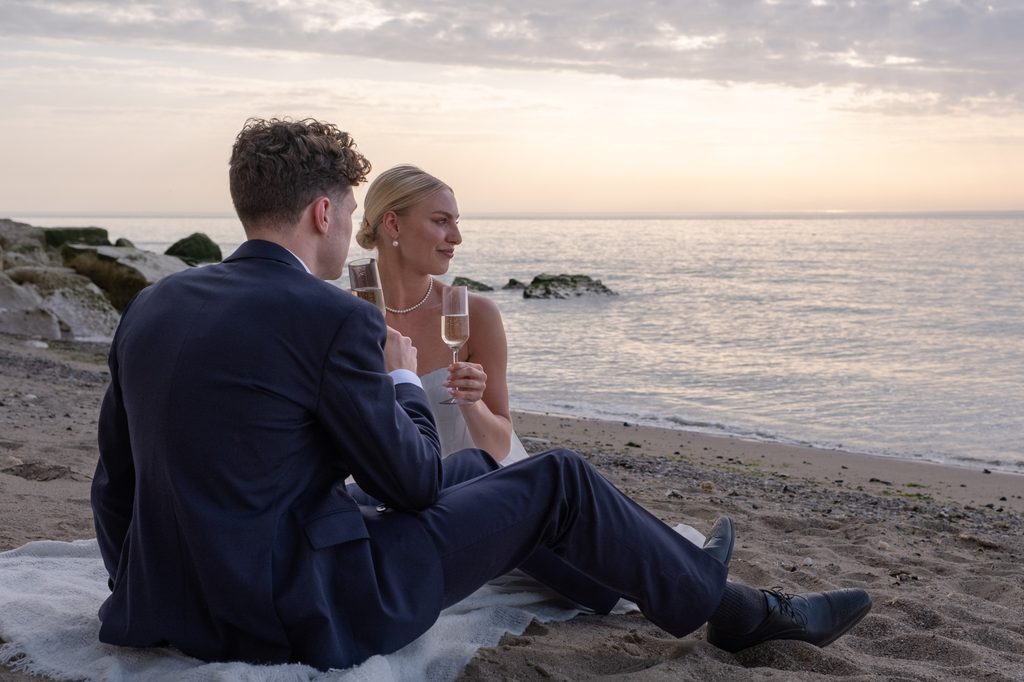
The less the clock dictates, the more the day feels like your own story
That doesn’t mean there shouldn’t be any structure. On the contrary: a thoughtful elopement day schedule does provide direction, but without having every fifteen minutes tightly planned. This works particularly well for couples who want to plan an intimate wedding in a destination where atmosphere, landscape, and togetherness matter more than formality.
With destination wedding planning, this flexibility can also be practical. Sunset, traffic, service at a remote restaurant, or simply your mood in the moment — everything can shift. A peaceful wedding day emerges when planning feels less like control and more like support. That way, dinner doesn’t become another obligation, but a natural moment to settle in, celebrate, and look back together on everything the day has already brought.